The Invisible Girl Project: Saving Lives in India
 In a recent trip to South India, I visited one of Invisible Girl Project’s partners that rescues and cares for unwanted baby girls. Rather than letting them be killed or trafficked, this home will take girls in, care for them, educate them, and teach them their inherent value…as human beings. The home has been rescuing and caring for girls for years, raising them, and then providing college educations or trades for them, preparing them for a future. Invisible Girl Project has been supporting them for the past three years.
I always love to visit this place, this home for girls. It is in the middle of lush Indian countryside, sprawled across 100 acres. When I enter the front gate, the Director always welcomes me “home.” I see familiar faces of little girls I met years ago and who remember my name. I smile as I hear the singing and laughter as over 150 little girls play and get to act like little girls. It does feel like “home” in so many ways for both my wife and me.
On this trip, I had time to spend with the Director and asked him if he would share some stories with me that I had not heard before in other visits…stories of some of the little girls who had been rescued and whose lives had been changed. As we sat in his office, he reached into one of his file cabinets and handed me a yellowed piece of paper that had a picture of a baby girl at the top and the name printed in large letters, “Kousalya.” Her story read as follows:
There was hush-talk of suspicion over a bag left at the gate of the baby home at 5 A.M. The weather was chill, cooled by the drizzle. When we went nearby, our hearts almost froze by the sight of the girl baby wrapped in rags and kept inside a nylon handbag. It was divine providence that the stray dogs did not damage the bag with the human babe inside. A note inside the bag read, ‘I am too weak and old to rear this child.’ Surely it is a gift of God for us to care for the gift of life of this baby.
Having heard a number of stories over the years about the little girls who had been saved, I had never had the chance to read the story of Kousalya. In fact, I probably could not pick her out of the crowd of girls that normally swarmed me every time I visited. No, Kousalya was not a name or a face I knew. I asked the Director, “Is she here?” He replied that she was indeed and that she was a little shyer than the other girls, but if I would like to meet her, he would introduce me.
We left his office and strolled the grounds to find her. Encountering a number of girls who were running and playing, we eventually approached a quiet group of four little girls sitting on the ground. As they sat reading and doing homework, the Director said, “Kousalya, please come here.” She stood quickly, obeying. He then said, “Kousalya, this is Brad uncle.”
She was beautiful, about 11 years old…Full of life and light in her eyes. I smiled at her and asked, “Kousalya, how long have you lived here?”
She responded, “As long as I can remember. I came when I was a little baby. I am studying very well. I have many friends.”
I smiled and thanked her. I then thought to myself, that Kousalya was given a chance that every girl—every person in India deserves. She was rescued and has been cared for, unlike other girls in India, who are murdered as little babies. She was thriving, unlike other little girls in India who are abandoned or neglected. She was being educated and cared for, unlike other little girls in India who are seen as a commodity and are trafficked into brothels at such tender ages.
Yes. She had a home, where they believed it was a “gift of God” to raise her. A home. And, seeing the tangible result of the rescue and care for Kousalya reminded me why my wife and I feel like it is “home” too.
While IGP’s partner organization is not the ultimate answer to ending gendercide in India, this organization is acting to save lives of girls, just like Kousalya, one girl at a time. And, if one girl at a time learns that her life is valuable, just because she is a human being, then the Indian culture can begin to be changed, one child at a time.
Mother Teresa once said, “If I look at the mass I will never act. If I look at the one, I will.” IGP supports Indian organizations that help save and transform the lives of little girls like Kousalya, one at a time.
The Invisible Girl Project is part of the It’s a Girl action campaign. Please consider donating to them through the It’s a Girl Causes campaign.
DONATE to the INVISIBLE GIRL PROJECT
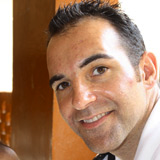
Brad McElya and his wife, Jill founded Invisible Girl Project (IGP) in 2009, while living in India. Now a non-profit organization based in the U.S., IGP is a grassroots organization that supports Indian organizations that rescue vulnerable girls and care for them, transforming their lives, and teaching them their inherent value. Brad and Jill regularly travel to India to visit IGP’s partners and support their organizational and financial needs.
The views expressed by guest contributors to the “It’s a Girl” blog represent the opinion of the individual author who contributes the content and should not be interpreted as being endorsed or approved by Shadowline Films. We feature these contributions to foster dialogue and exchange on gendercide and invite our readership to join the discussion.

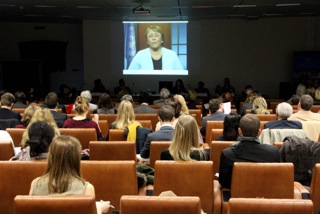 I first learned of the horrible phenomenon of femicide through data from the United Nations Office on Drugs and Crime (UNODC) and the Small Arms Survey report. We (the Academic Council on the United Nations-Vienna – ACUNS) had decided to do a side event at the UN Crime Prevention and Criminal Justice Commission in April 2012. Our ACUNS team was looking for interesting speakers and possible films to screen for that event, when my wife noticed an article in the Independent (January 16), which mentioned the film “It’s A Girl”. We managed to track down the producer Andrew Brown. Actually, we thought the film was already completed and then entered into a continuing discussion over several months about whether we could screen the film at the UN Office in Vienna. In the end, we recommended that It’s Girl be premiered at the Vienna Human Rights Film Festival, which it was on December 4 to a sold out crowd.
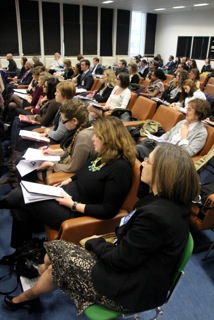 The symposium took place on November 26 on the occasion of the International Day for the Elimination of Violence against Women. This symposium could not have taken place without the support of the Austrian Federal Ministry for European and International Affairs; the Permanent Missions to the UN Office at Vienna of Austria, Argentina, Philippines, Thailand, and the United Kingdom of Great Britain and Northern Ireland; Small Arms Survey; and the Vienna NGO Committee on the Status of Women.
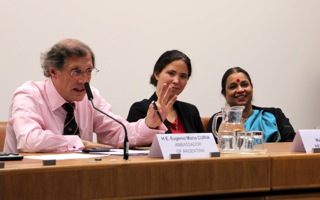 The It’s a Girl documentary played a vital role in mobilizing our ACUNS team to organize the femicide symposium. Now that it has been released with great fanfare, we look forward to screening this powerful film to additional groups interested in the topic.
 Download full report on the Vienna Symposium(4.07 MB)
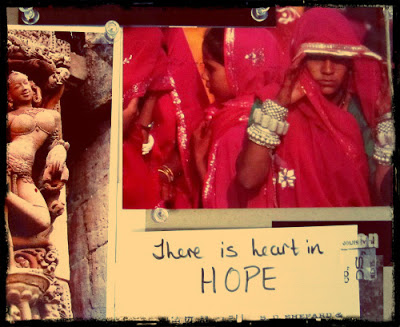 I have written about this issue so many times on my blog…but every single time I start…I am at a loss for words. How do I write about this? How can I say what I want to say without using so many numbers and statistics. Over 50 million (yes, million!!), 70 million or 100 million girls and women missing?? No-one really knows the numbers. I mean, there is no real way to calculate female fetuses and girls that are killed in the womb through sex elective abortions. There is no way to tell how many baby girls are suffocated to death…it’s all very hidden so it’s impossible to get a real number. But when you see a very skewed gender ratio in India and China…you start to get a clearer picture of the magnitude of the gendercide that is happening right now halfway across the world. But really, it’s only a heartbeat away…because these girls are our daughters…these women are our sisters.
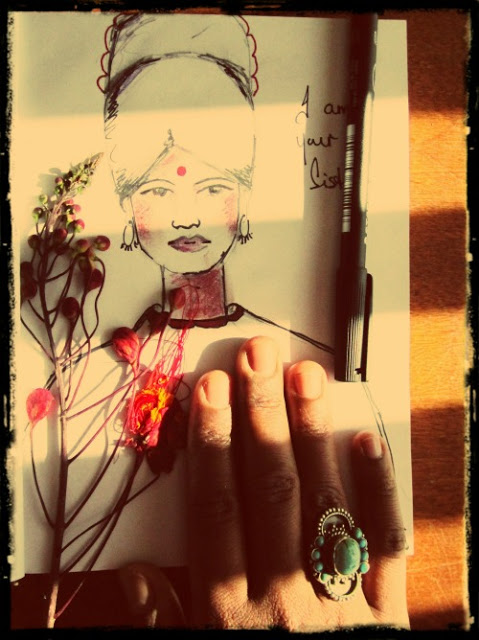 This is what’s true. When we were in Vancouver a few months ago, I went to see a special screening of the movie It’s a Girl. Afterwards..I plunged into a dark place. I cried and cursed and ranted on and on. Then I cried + cursed some more. It broke my heart. And it pissed me off. And in between all of that…I was ever so thankful that Tara was not born in a culture and society were this was permitted. But then something happened…a shift in me, in my heart + mind. There are millions of Taras that are not permitted to be born there…that are never allowed this most basic right…the right to live!!! And I realised that it is not enough, not enough, not enough…for me to be grateful that my daughter was not born there.
 Originally posted on Soraya Nulliah’s personal blog at